Spy Hunter

With its smart weapons, awesome cars, Spy Hunter was viewed as a very stylish game back in the arcades on the early 1980s. It was a title that playing into any boy's fantasies- secret agents, nasty weaponry, and a driving lincese. Make no mistake though, it was the action packed gameplay that kept people coming back for more again, again, and again...

1943

The year that the war ground on may have been 1943, when rationing continued to bite down hard, construction work on the Pentagon was completed, and the Japanese forces were driven back from Guadalcanal, but it's a whole lot more enjoyable if you think of it as this wonderful little vertical-scrolling shooter from Capcom, released for the delight of the arcade-going populas in 1987...

Diablo

The game isn't just a good looking isometric dungeon crawler, it is THE best dungeon crawler. A simple - almost brainless trek through caverns and catacombs filled with vile creatures, not to mention all the loot. Blizzard spent a lot of time working on the generation of the game's spaces, making items, enemies, and geography be different every single time you load up the game...

The Elder Scrolls III: Morrowind

The Elder Scrolls games are best known for the fourth chapter in the series, Oblivion, released in 2006. In comparison,The Elder Scroll's Morrowind is altogether more of a curate's egg, neither as commercially successful nor critically applauded as it's successor. Perhaps because of that, however, it's also a much more interesting game...

Rogue

Rogue first appeared on college Unix systems in 1980. It contains an infinite variety via a series of randomly generated, ASCII-rendered dungeons that must be explored in a bid to retrieve the Amulet of Yendor (Rodney spelled backwards) from somewhere behold the twenty-fifth level -- an unlikely achievement given the imposing difficulty of even the earliest dungeon layers.

Showing posts with label 1990s. Show all posts

03 October, 2012

Lemmings

Release Date: 1991
Platform(s): Amiga, ST, PC, Other Ports
Developer: DMA Design
Genre: Puzzle

Few games other than Tetris can claim to have appeared on as many formats as this historic action puzzler. Dave Jones, the founder of DMA Design, claims to have lost count at twenty, and that was before the numerous PlayStation and mobile iterations were added to the list.

Famously, the idea was conceived almost by accident, when artist Mike Dailly was experimenting with the animation of tiny characters in an 8 x 8 pixel grid. Programmer Russel Kay saw the results and pronounced: "There's a game in that." And there certainly was.

At first glance, perhaps, Lemmings looks like a standard late-1980s platformer, its sparse yet neat visual style presenting teeny, teeming sprites.But it is, in fact, a masterpiece of sandbox design, allowing players endless ways to complete each level. Over a vast series of levels, the player must guide a set number of tiny lemming characters from the entrance to the exit, avoiding hazards such as lava pools and large falls. Instead of directly controlling the critters, however, there is a range of eight skills that can be designated to individuals via a point and click interface.


The builder skill, for example, allows a lemming to construct a staircase across a chasm, while bashers, miners, and diggers all create differently angled holes in platforms to create new routes. It is up to the player to decide how, the available skills should be used to solve each level.

Press coverage at launch was very enthusiastic, and 55,000 copies flew from shop shelves on day one (impressive at the time). The ensuing conveyor belt of sequels and conversions led to subsequent sales of more than fifteen million units. Alongside contemporaries such as Worms and Populous, it's a defining work in the British game design canon.


15 August, 2012

Breath of Fire II

Release Date: 1994
Platform: SNES
Developer: Capcom
Genre: Role-Playing

Breath of Fire II is an RPG great on a console crammed full of them. Released on the SNES, it joins the likes of Secret of Mana, the Final Fantasy series, Chrono Trigger, and the original Breath of Fire at the very top of its chosen genre. It takes place 500 years after the end of the original game to tell the story of Ryu Bateson, a blue-haired boy hero on a quest for justice, which is launched when his friend is framed for a crime he didn't commit.

The game picks up the day/night cycle from its predecessor, which sees the world and its inhabitants transform with every sunset, and it features the turn-based, random encounters that are a staple element of the Japanese RPG genre. Picking the right formation is a crucial part of combat strategy, while another key feature is each character's special ability, such as Ryu's dragon transformations or Bow's fusion form as a giant, cannonball-launching mech.

One of the best things about the game is the way the world is gradually opened up. Each party member has a unique skill that they can use outside of the normal course of play, so fishing and hunting skills, for example, unlock different mini-games. But the ability to swim or bridge chasms allows the party to access more of the increasingly vast game world, and it's the pacing of exploration is one of the game's greatest strengths. Another is the way the game prefigures the Dark Cloud series by giving you the ability to build your very own town, choosing its architectural style, and gradually filling it with non-player characters that can help you on the main mission -- a mission with multiple endings, depending on how effectively you steer Ryu and friends on one of the classic quests of 16-bit storytelling.

14 August, 2012

Wave Race 64


  • Release Date: 1996
  • Platform: N64
  • Developer: Nintendo
  • Genre: Racing


Let's be honest, nobody ever fell in love with Wave Race 64. Despite hailing from the same stable as Super Mario and company, this Jet Ski racing game with its four identical riders just doesn't have the personality for that. The visuals don't help either. Superficially, Wave Race 64 is even a bit-- whisper it-- annoying.

Yet the game made a splash (I apologize deeply for the lame pun) on release and, unlike many other older games, it's still worth checking out on its own merits, irrespective of its historical value (which isn't much; the game spawn no great lineage of Jet Ski titles). It's all about the realistically modelled water, and the joy of steering your craft upon it. The N64's innovative control stick had already proved that analog was the future, thanks to the fin control it afforded Mario in his N64 debut, but Wave Race 64, itself a very early game for the console, was an even more convincing demonstration. As you steer your bouncing craft across the choppy surf or pull a hairpin turn, you can almost see the old two-dimensional, on or off era sinking beneath the waves.

The game is structured as a conventional racing game, albeit all at sea. In most races, you need to beat your fellow skiers around an island in various weather conditions, while also steering your craft past navigational buoys. Correctly passing a buoy boosts your speed, and at maximum power you really fly. Championship, Time Trial, and Stunt modes round out the package, and the mandatory two-player mode is also good  fun, despite the somewhat restricted view afforded by the split-screen implementation.

Wave Race 64 remains one of the best water-based games you can play -- although admittedly that's a genre with limited competition.

11 August, 2012

GoldenEye 007


  • Release Date: 1997
  • Platform(s): Nintendo 64
  • Developer: Rare
  • Genre: Shoot 'Em Up


You could argue that the title of Best James Bond Game ironically sits with a series that has nothing to do with James Bond, the Metal Gear series. Less debatable, though, is the holder of the title of Most Important Console First-Person Shooter. Before GoldenEye 007, and adaptation that played fast and loose with the 1995, many would struggle with even the idea of such a thing.

Unlike contemporary Turok: Dinosaur Hunter, GoldenEye 007 proved that joy pad controls were not a disability. Both games featured precision aiming thanks to the N64 analog stick, but Rare knew best how to use it. Revelling in the lack of hyper-kinetic PC controls, it made a game in which every shot felt like something handmade. Hit a shoulder, and an enemy might pirouette to the floor; the groin -- an natural favourite -- and they'd fold and keel over; the head, and they'd drop as if hit with a pole-arm. Games like Virtua Cop got there sooner but, to borrow a phrase, nobody does it better than Bond.

In single-player mode, GoldenEye 007 features a rarely emulated difficulty method that switched objectives at each level, making it highly replayable even now. But the game's split-screen support for up to four players, as much as a testament to the N64's hardware layout, was the proof of concept for all console multiplayers. When games like Halo try to capture that feeling via Xbox Live, what they are referring to is the sight of your armchair buddy being dropped by the Golden Gun, on of umpteen weapons and modes that kept this game going for years.

Culling gadgets and characters from the entire Bond universe, GoldenEye 007 pounced on every opportunity its license could afford.

08 August, 2012

EverQuest


  • Release Date: 1999
  • Platform(s): PC
  • Developer: Sony Online Entertainment
  • Genre: MMORPG


In the 1990s, role-playing games already had a solid and devoted fan base, with opportunities to imagine great fantasy worlds while acting out the life and times of any class, race, or even sex of choice. By late in the century, multi-user games of increasingly cutting-edge visuals were braving the fledging Internet. it wasn't until the arrival of EverQuest, however, that the entire experience of online role-playing was elevated and thrust into the true 3-D age.

Requiring a quick, consistent Internet connection and an expensive 3-D graphics card, EverQuest occupied a niche of a niche in 1999. But such technology is used to its full potential, the classic fantasy world of Norrath coming to life in a way that captured gamers' imaginations and kept them coming back for more... and more... and more for a surprisingly long time.

Oh, sure, the svelte elves aren't outfitted to survive sprawling plains, mountains, and cavernous dungeons, but hell if they don't lure leering players to unload a few precious gold pieces to aid a fawning damsel in undress. Or you can take on a noble paladin role, vanquishing this and dispelling that; or skulk with the rogues; or cast with the mages; or so many other options that the world experience appears endless. You explore, learn trades and skills, as well as languages and even a whole new shorthand vocabulary (including the oh-so-appropriate moniker, EverCrack).

No doubt building a world and game mechanic from scratch brings attendant teething problems, imbalances, and even straight up breakages, but between the zone exploration, the ambition, and opportunity for socializing with fellow gamers, the overall experience compels any RPG fan to commit for a long, long haul.

22 December, 2011

Daytona USA


  • Release Date: 1993
  • Platform(s): Arcade
  • Developer: Sega
  • Genre: Driving

The first time you successfully drift around a turn in Daytona USA, it all makes sense. First, steer into the curve. Then hit the brakes -- you'll learn how hard you need to push on the pedal -- and correct against the turn just so . You'll find yourself sliding sideways at high speed, your car in a delicate equilibrium between spinning out and bolting off the course, poised to explode onto the straightaway. Realistic? Not exactly, but so natural that any other racing game you play afterward will feel stilted and awkward.

Among its many technical innovations, Daytona USA is credited as a pioneer of texture-mapped polygons, giving its 3-D models a more organic look than those of Sega's earlier efforts, Virtua Racing and Virtua Fighter, with their plain, flat-shaded polygons. Texture mapping is used to great effect here, framing the racetracks with lush greenery, imposing cliff formations, and varied cityscapes. Up to eight competitions can be networked locally for epic in-person battles, which is where drafting -- riding the slipstream behind another player's car to create a slingshot effect out of turns-- can really make a difference.

Daytona USA also has its share of infamy. During the attract mode and on the Dinosaur Canyon racetrack, you are subjected to a cheesy, lounge-style song called "Let's Go Away," sung in English by a heavily accented Japanese man. You won't be able to get it out of your head.

A disastrous home version for the Sega Saturn in 1995 is reviled for its choppy frame rate and flickering polygons. In 1996, Sega would rectify the situation with Daytona USA Championship Circuit Edition, which sports improved graphics, truer handling, and three new racetracks. More faithful to the arcade original -- except for its instrumental only version of "Let's Go Away" -- the Championship Circuit Edition is the definitive home version.

20 December, 2011

Command & Conquer: Red Alert


  • Release Date: 1996
  • Platform(s):  MS-DOS, Windows, PlayStation
  • Developer: Westwood Studios
  • Genre: Strategy


Real-time strategy games tend to be fairly serious sorts of experiences. They're about war, for one thing, which is already serious enough, and they're generally enormously taxing and demanding, requiring players to take in an entire battlefield's worth of information, to isolate threats very quickly, and react to devastating changes on the fly.

Command & Conquer: Red Alert features some hectic conflicts
So it's no surprise that Command & Conquer is a fairly serious real-time strategy game. Series offshoot Red Alert, however, really isn't. Red Alert is a counterfactual real-time strategy, turning on the notion that Einstein went back in time Adolf Hitler when he was still a nobody (already things are becoming fairly unserious), only to return to his own to find the Allies hard at war in Europe, fighting against a massive Soviet war machine that has sprung up in the absence of Nazi Germany. It could happen. What's less likely to happen, however, is the development of some of the units that Red Alert lets you mess around with. These include science-fiction standards like Tesla Coils, capable of zapping troops in a flurry of electricity. Subsequent games would take this concept further until, in Red Alert 3, you were firing armoured bears at enemies or dispatching tanks that transformed into fighter jets.

That said, despite the wobblier sets and campier acting, Red Alert remains serious about being a game. Factions and units are well balanced, maps are clean tactical spaces, and the user interface sets the genre's standard. With the series getting loopier and loopier with every installment -- the Russian shock trooper in hot pants -- Red Alert remains a necessary antidote to the glum world conflicts of the main Command & Conquer plotline, providing an explosion of colour in a heavily cratered landscape.

15 December, 2011

Star Wars: TIE Fighter


  • Release Date: 1994
  • Platform(s): PC
  • Developer: Totally Games
  • Genre: Shoot 'Em Up


Star Wars: TIE Fighter features visceral space combat
It was perfect symmetry. Before making Star Wars: TIE Fighter, designer Lawrence Holland of Lucasfilm Games created a suite of World War II dogfighting games, including Secret Weapons of the Luftwaffe. For Star Wars' space dogfights, George Lucas looked to The Dam Busters and 633 Squadron for inspiration. When Holland was asked to think about creating a space combat game, he quickly realized that he and Lucas were already looking squarely at the same sources. The result was a series of games that represent some of the best file tie-ins ever created.

The secret is in the subtle blend of strict adherence to Star Wars lore and a willingness to design imaginatively on top of them. Immediately striking are the intense, twisting dogfights against star fields streaked with beams of bright, green and orange laser fire, as well as the iconographic lines of Star Wars' distinctive spacecraft. But the meat lies in one of gaming's most beautiful mechanics: your craft's power system. Demanding that you delicately balance your finite energy supply between lasers, engines, and shields, you are continually asked to think about how to approach each situation. Dump all your power into engines for speed, and you'll risk running out of lasers and having no protection when you meet trouble.

Star Wars: TIE Fighter, which has you fight for the Empire, features smoothly shaded fighters and meticulously designed missions. And though you might assume you'd always want to fight for the plucky Rebellion, the game's vision of dark political intrigue oozing below a veneer of mundane bureaucracy is gripping. It remains a terrible thrill to pilot a craft as fragile and feather-light as a regular TIE. Showing Star Wars from the dark side resulted in one of the most enthralling visions of its universe.

Mario Golf


  • Release Date: 1999
  • Platform(s): Game Boy Color
  • Developer: Camelot Software Planning
  • Genre: Sports


As Mario's unlikely shadow career as the world's most versatile sportsman evolved with the glorious playable Mario Kart games, golf was perhaps the most likely candidate for further expansion. The rolling hills of the Mushroom Kingdom would be an ideal location to sink a few holes. Golf games already had an established formula to riff on -- Nintendo had already made a couple of stand-out entries -- and Mario's crazy cast of friends and enemies would probably look delightful in plaid slacks, polo shirts, and funny little hats.

Who knew it would turn out as well as this, however? Camelot's game has (exceedingly light) elements of an RPG as you explore the local clubhouse, learning the ropes, setting up matches, and making friends, but it's also a smart, calculated, gold sim for one or more players. It may be easy to play but Mario Golf is filled with variables that affect play, as well as charming, rich details, such as a suite of brilliantly structured courses; nice physics and ball effects; and a lovely, comprehensive leaderboard made for keeping track of your best shots and bragging about them to your friends. Visual and aural feedback is absolutely great too, as you might expect, and the whole thing basks in the warm glow of the Mario universe -- even though you spend a rather large part of the game unlocking a range of characters who aren't the famous plumber.

Some of Mario's later excursions into sports have seemed a little tired at times as the branding, special moves, and general gimmickry became increasingly desperate and shrill, but here, on the Game Boy Color, the whole thing meshes perfectly together, and Mario is as at home on the emerald greens with a putter and sand wedge as he is dressed as a raccoon soaring over a gaggle of Koopa Troopas.

11 December, 2011

Star Wars Jedi Knight: Dark Forces II


  • Release Date: 1997
  • Platform(s): PC
  • Developer: LucasArts
  • Genre: First-Person Shooter


Imagine the pressure. The original Dark Forces successfully coats a doom-like first-person shooter with the veneer of the Star Wars universe, it delights gamers, sells well, and a sequel goes straight into production. The anticipation for the next installment of Kyle Katarn's adventures was through the roof, and LucasArts delievered a stunning shooter experience that integrated role-playing style, Jedi power progression, and story choices into a more traditional run-and-gun action product. And it introduced lightsabers, Oh, yes, the lightsabers.

A Fierce Looking ATAT
Building a system that would fluidly switch to a third-person perspective when Katarn draws out the big stick proved to be a significant technical hurdle that was executed perfectly. Katarn's story as a former Imperial officer turned mercenary takes a huge leap forward when he uncovers the force. Now he can learn new Force powers and choose whether to follow the Light or Dark path on a quest to find his father's murderer.

It's a gripping progression that invests the player with an important role in this post-Return of the Jedi story-line. Even after the single-player plot-line is exhausted, it's easy to replay, choosing different Jedi powers and experiencing the story from the other side. Then you can take those skills online in a multiplayer mode that pits Light against Dark Jedis in classic four-player match-ups.

This package set a new ambition bar not just for all future Star Wars games, but for the first person shooters in general. As three-dimensional graphics cards were gaining a foothold, this game was one very good reason to join the revolution, if you hadn't already. For fans of the series, all it takes is for that famous score to start playing, and the chills run down their spines.

04 November, 2011

The Incredible Machine


  • Release Date: 1992
  • Platform: MS-DOS, 3DO, Macintosh
  • Developer: Dynamix
  • Genre: Puzzle

Emergent game play and physics-based interactivity may seem like fresh concepts, but it was The Incredible Machine that really introduced these major game components almost twenty years ago.

Without a doubt inspired by the ridiculously elaborate contraptions imagined by cartoonist Heath Robinson and Rube Goldberg, The Incredible Machine tasks players with inventing their own devices to carry out a series of simple actions. On each level an objective is give, ranging from popping a series of balloons to launching rockets to re-housing goldfish. A range of "useful" components is provided in limited quantities, which can be dragged and dropped onto the game space to construct the relevent machine. Basketballs, flashlights, and pulleys all figure -- as do mice, cats, and monkeys on bicycles -- and all can be variously combined to complete the tasks.

The beuty of the game is its accurate simulation of gravity, inertia, and other vital physical processes. Just as important, there is no one way to complete each level, and emergent approach that encourages endless exploration. The game also comes with a sandbox mode in which users are free to construct their own machines from scratch.

The game was a huge success on the PC (later appearing on the Mac and 3DO console), and creators Kevin Ryan and Jeff Tunnell would carry on to oversee two sequels, as well as a range of spin-offs, before their company, Dynamix, was dissolved in 2001. The series would surface again in 2007 as a mobile adaptation, courtesy of Vivendi. Two years later, Tunnell brought back the rights and further titles were planned. After a decade-long hiatus, the machine is finally being switched back on.

Incredible Machine can get wild sometimes.

27 October, 2011

Age Of Empires


  • Release Date: 1997
  • Platform: PC
  • Developer: Ensemble Studios
  • Genre: Strategy


While advances in video games are typically characterized by leaps in technology or game play innovation, lateral crossover is also important. Like some novel technology concocted in one of its temples, Age of Empires crossed two existing game play templates and boiled down the result to produce a new branch in strategy gaming.

The first parent was Civilization, Sid Meier's brilliant 1991 title. Devotees loved it, but its complexity and turn-based mechanics put off many more. By the mid-90s, real-time strategy offered a more accessible way for armchair generals to marshal their forces. The best-selling strategy games -- Command & Conquer and Warcraft -- and their copycats were science-fiction or fantasy affairs. What Ensemble Studios (including designer Bruce Shelley, who worked on Civilization with Meier) did was meld Civilization's historical trappings and empire building idea with the genre's game play and pretty graphics.

The result, Age of Empires, was an approachable take on dictatorship with enough historical finery to satisfy all but the most bookish rulers. Assuming leadership of one of a dozen peoples, from the Greeks and the Babylonians to the Japanese Yamato civilization, you guide your race from being hunter gatherers through several transitions to create a dominant Iron Age culture. The twelve civilizations are divided into four main group, each one with its own distinctive architectural style. The emphasis is on military progressions, though victory conditions include building a Wonder, such as an Egyptian pyramid. On the fighting front, dubious artificial intelligence, later patched, and Age of Empires launched a globe-conquering franchise that eventually sold twenty million units.


Camels, Elephants, and everything in between. Age Of Empires features a large  variety of units.

19 October, 2011

Dr. Mario


  • Release Date: 1990
  • Platform(s): SNES, NES, Satellaview, Game Boy
  • Developer: Nintendo
  • Genre: Puzzle
In Nintendo's rush to create a Tetris clone unencumbered by the legal disputes of the original, it seems nobody stopped to ask a few fundamental questions. For example, when did this world-saving plumber find the time to acquire a medical degree? Perhaps the reason no one raised such pressing issues is that they were too busy playing Dr. Mario.

Instead of the blank slate that beings most Tetris-like games, each level of Dr. Mario is contaminated with red, yellow, and blue viruses. Mario attacks them by way of double-sided capsules, each half coloured either red, yellow, or blue. Stack like colours atop or next to one another to eliminate them, match for or more in a row and they disappear.

One major difference between Dr. Mario's capsules and Tetris's tetrominoes is that the coins of Dr. Mario's realm are much more manuverable. The result is a greater focus on agility: if you want to succeed, you'd better master split-second reactions. For a Tetris knockoff, Dr. Mario is remarkably original. The game spawned a thriving branch of the falling puzzle genre, and without it there might have been no Lumines or Bejeweled.


02 October, 2011

Civilization

Release Date: 1991
Platform: PC
Developer: Microprose Software
Genre: Strategy

Want to make a PC gamer of certain age cry? Whisper "Civilization" in his or her ear. There are any number of reasons why the tears might flow, but it's likely because more sleep, weekends, job, and relationships have probably been lost to Civilization than any other game.

This seminal strategy experience is vast. Beginning with just a settler wandering a hostile world 4,000 years before Christ, you found first a city and, through your choices, a civilization capable of defeating all its rivals or of sending a spaceship to distant Alpha Centauri. Blocking your path is the land unknown, barbarians, and rival civilizations, and the tools at your disposal to run the gamut from trade and diplomacy to all out hostilities.

You decide what civilization you'll play, choosing from the Mongols, the Romans, and other past and present contenders for the title of global superpower. Your choice affects trivial matters such as the names of your cities  or the colours of your army: Civilization's genius is that this decision does not determine the paths your people follow.

The technology tree does that; a brilliantly conceived flowchart of human progress that has been copied by most strategy games in the wake of Civilization. By researching, for instance, the wheel, you can unlock further related technologies, such ass transport or vehicular combat units. Few areas of human endeavour are ignored, but since you can only research on thing at a time, your civilization is shaped by the order of the choices you make.

With day-to-day tasks ranging from war to farming to transport planning to developing the Wonders of the World, the demands on the player are immense. What's incredible then, is how the game manages to make time disappear as you play. If you've got a night to kill, the set it aside to play Civilization.


26 September, 2011

Metal Gear Solid


  • Release Date: 1998
  • Platform: PC, PS1
  • Developer: Konami
  • Genre: Stealth

When designer Hideo Kojima brought his Metal Gear series to PlayStation, he did more than just kick-start the most popular stealth franchise in gaming history. He began a conversation that continues today, sharing his fears of nuclear holocaust, his distrust of the industrial-military complex, his love of movies like The Guns of Navarone and You Only Live Twice, and his sympathy for the soldiers discombobulated by war. "Ghosts of the battlefield," he would call them, putting a fresh slant on the tired old cliché of the video game action hero.
Egoraptor's parody: Metal Gear Awesome

Retired special agent Solid Snake has been dispatched to Shadow Moses, a remote fortified island in Alaska. His mission is to quell and uprising staged by FOXHOUND, a terrorist cell in control of the island's secret: a walking nuclear doomsday weapon called Metal Gear Rex. Little does Snake realize that its mastermind, codenamed Liqud Snake, is actually his genetic twin, part of a government project to breed the ultimate soldier. His lieutenants, furthermore, are psychopaths and assassins with their own twisted agendas. The government calls them traitors, but can anything be that simple in this new world order?

If you think that sounds convoluted, wait until it gets going. Kojima isn't a man to use five words when fifty will suffice and didn't make a game to be played only once. The threads established here would multiply tenfold in games to come, as would the options for combat and stealth. Officially a "sneaking" game, Metal Gear Solid is fast and relatively forgiving; escape often as simple as hiding under a cardboard box. Intensely cinematic with its reaction shots and cut scenes, it's more fondly remembered for toying with that illusion: one boss's weakness being a quick change of controller port.

Metal Gear Solid revolves around stealth combat.

13 September, 2011

Super Mario 64


  • Release Date: 1996
  • Platform: N64
  • Developer: Nintendo
  • Genre: Platform


Mario would seem to have come to the end of his natural life as games embraced the third dimension. Nintendo's mascot was getting on a bit, and he was so emphatically linked to the suddenly rather tired world of two-dimensional scrolling that many fans suspected either retirement or, worse, irrelevance awaited him on Nintendo's new console, the N64.

In fact, neither was the case. Mario's first three-dimensional adventure saw the plumber as trailblazing and trendsetting as ever, showing competitors how it's done, and throwing analog controls into the mix (a little push forward to walk, a push all the way to run) to create an adventure no one would forget in a hurry -- particularly Mario's rivals on other platforms.

Certain things had to change. Rather than a long travelogue quest heading from the left side of the map to the right, Super Mario 64 introduces Peach's castle as a hub from which other levels would be accessible once enough stars had been collected from the game's various challenges. The means of entering these themed levels -- leaping through paintings -- is still a genuinely magical piece of design. The worlds found beyond, all of which have room enough for a handful of different tasks, are masterpieces of thrifty imagination, providing the space for a coin hunt one minute and a boss fight the next.

Like the hub itself, the levels become non-linear arenas, and from the mountainous peaks of Cool, Cool Mountain to the tangle of pathways that make up Big Boo's Haunt, Super Mario 64 almost feels more like a theme park than a series of themed courses. No matter where exactly it's getting its inspiration from, however, Super Mario 64 remains one of the most influential -- and one of the best -- video games ever made.

05 August, 2011

Quake


  • Release Date: 1996
  • Platform: PC
  • Developer: id Software
  • Genre: First-Person Shooter


Despite being a pioneer of full three-dimensional graphics in the first-person genre-- or perhaps because of it--Quake is a master class in level design. It's brightly confident in it's grasp of space and solidity; even the difficultly and episode selection is its own memorable environment. The game crams in jumping puzzles, a secret area, and is also capable as serving as an unlikely death match arena. In fact, if you pick any of Quake's two dozen or so levels, you'll find that the critical path is less a line than a rabid dance lesson.

Chiseled into rock or beaten out of metal, Quake's forbidding angles remain unique, haunted by the ghosts of the games it could have been as id's designers fought between a dark fantasy RPG and a science fiction shooter. Though it was the instigator of the "brown corridor" visual treatment, there's art and intention to the oppressive monotone. Its disconnected areas are thick with a sense of place, of eye-catching incidental detail, stranded in crushing blacks: vaults hemmed with silver crosses, the massive embossed metal Jesus, charnel house window settings for apocalyptic stained glass.

All anchored by one of the great pre-music collaborations between developer and composer. Nine Inch Nail's front man Trent Reznor's amazing soundtrack is at turns deafening, oily, and pitiless, and never less than part of Quake's texture. Aural cues sound out environmental hazards and forwarn of enemies well enough to play blind (or a blind panic). In a Quake level, Run isn't a toggle, it's a commandment, and the numerous strengths within this title turn a game that should have been a "what if" into a "this is".


03 April, 2011

StarCraft


  • Release Date: 1998
  • Platform(s): PC
  • Developer: Blizzard Entertainment
  • Genre: Real-Time-Strategy


StarCraft was the first western title to pin it's success on South Korea. There was something about this real-time sci-fi strategy game that touched a nerve, making StarCraft a staple of the country's multi-player PC cafes, which were emerging in the 1990s, leading to the sale of 4.5 million copies in the territory. It also helped to establish South Korea's professional gaming scene.

Of course, with more than 11 million sales worldwide, StarCraft is one of the best-selling PC games ever made. Yet while initial reviews were unanimously positive, it's fair to say that no one foresaw StarCraft as being quite the success that it has become. Despite the isometric graphics, the game isn't especially impressive, and less successful rival games have an edge in RTS innovation with unit control and resource management.

But StarCraft has a very special trick up its sleeve: three completely distinct and playable races. The Terrans (Humans), the Zerg (nasty, swarm aliens), and the Protoss (high tech, religious warriors) all have their own units that don't just look different but play diffferently too. For instance, as Zerg you can burrow underground and attempt to overwhelm your opponent with sheer numbers, while as Protoss you have fewer units, but much more powerful weapons at your disposal. Upon release, no reace was blatently over powered, and Blizzard has maintained this balance very well with occasional patches that address multiple tatics.

The combination of diversity and balance is extremely difficult to achieve, Blizzard overcame this challenge with StarCraft and followed it up with a well deserved sequel, StarCraft II.

30 January, 2011

Harvest Moon


  • Release Date: 1996
  • Platform: SNES
  • Developer: Natusme
  • Genre: Role-Playing


What role would you want to play as in a video game? A spaceman? A God? A soldier? A knight on a perilous quest? Okay... How about a farmer? Tilling the land, tending the livestock, looking after crops, and basing your life around the passing seasons. Not so keen? Are you sure?

Harvest Moon is a farming simulation, but a farming simulation in which the nasty bits of farming, such as wrenching chicken's heads off and putting bolts through cow's brains, are taken back a bit to make way for a gentle anime depiction of the countryside lifestyle in all it's glory. The game will have you feeding and looking after your animals, watering your crops, milking your cows(and talking to them while you are at it) and other farming activities in the most timely manner imaginable in order to maximize your farm's potential.

As unlikely as it sounds, the game's agenda will cast a strong spell on you until you are so hooked into the game that you can't escape it. With time management mechanics at it's heart, Harvest Moon is capable of dressing it's bare clockwork up in such a way where you don't really mind being rushed around or sent on a series of what are, essentially, thankless tasks.

Fans certainly don't seem to mind, as they buy near identical sequels by the boat-load. They ensure that every season of gaming has a Harvest moon release or two. While the recent titles in the series are only for the hard-core pretend farmer, the original was a title that anyone could pick up and enjoy. The game is available on the Wii's virtual console service. So what are you waiting for? Give this unique game a try!

When Farming Didn't Involve Facebook

27 January, 2011

Grand Theft Auto II

  • Release Date: 1999
  • Platform: Various
  • Developer: DMA Design
  • Genre: Action
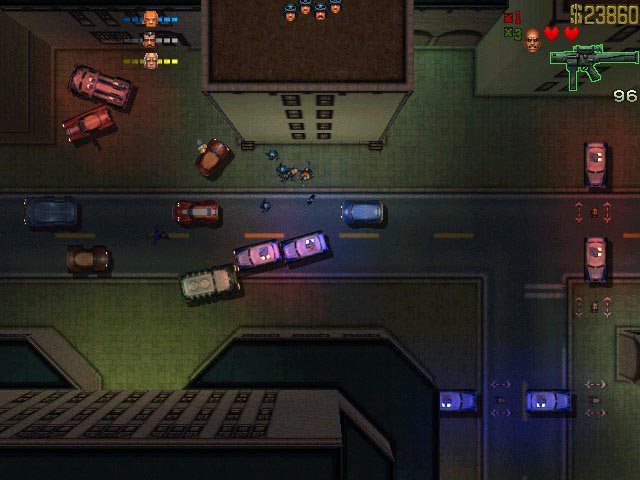
Grand Theft Auto 2 has been unfairly marginalized by the success of both its predecessor and it's successor. Keeping the top-down view of the first game in the series, it has been judged to be a minor iteration on an old formula, before the series' huge leap to 3D. But the game's innovations are far from insignificant. As with Grand Theft Auto, the game launches the player as a free agent in an open city, full of criminal potential. The sequel breathes life into the game with the addition of pedestrians. They get on buses, call on taxis, and even get in fights with the local gangs.

The gangs, too, present an important step, although not one Grand Theft Auto III would follow entirely. Multiple missions are on offer from the three competing gangs in the area, and each one, when successfully completed, will increase the favour of that gang and decrease that of it's competition. The player must continually juggle the satisfaction of each so as not to get gunned down when entering their territory.

Perhaps the game's greatest mix-up was to set the game not in contemporary America, but in the near-future dystopia, the cyberpunk feel which undoes a lot of the game's effort to build a credible living city. Nonetheless, the game still displays the developer's effort for biting humour, with it's cast of pervert scientists and vengeful Hari Krishnas. 


Grand Theft Auto and Grand Theft Auto II are available for download (completely free) directly from RockStar Games, here: http://9.bb/235785/rockstargames